
Looking for specialist piano removalists Wollongong trusts with the heavy, precious stuff? A piano isn’t just heavy — it’s awkward, valuable and easily damaged if it’s moved the wrong way. Our Wollongong piano removalists have the equipment, the technique and the experience to move uprights, grands and baby grands safely, every time. After years on the trucks, here’s the honest truth: moving a piano is one job you really don’t want to DIY.
From a family upright to a concert grand, our piano movers in Wollongong get it there in one piece.
Piano removalists Wollongong — at a glance
| Our rate | $165/hr + GST for 2 removalists and a 20 m³ truck, plus travel time. Same hourly rate whether the piano is on its own or part of a full house move. |
| Upright piano, ground floor to ground floor | Usually 2–3 hours all up locally, so as a guide $330–$500 + GST. Fixed price available once we know both addresses. |
| Upright with stairs, or a baby grand / grand | Third mover, piano board and skid, and more time. Quoted individually after you send photos of the piano and the access — we will not guess this one over the phone. |
| What we move | Uprights, baby grands, grands, digital pianos, organs, pool tables and other heavy awkward items. |
| Equipment | Piano trolley, skid board, heavy-duty straps, padded blankets, stair-climbing dolly and tail-lift truck. |
| Where | Wollongong, the whole Illawarra (Helensburgh to Kiama), Shellharbour, the Southern Highlands and piano moves to and from Sydney. |
| Busiest days | Saturdays book out first. Midweek is easiest to get, and easier on the neighbours’ driveways too. |
| Book | Call 1300 015 050 Mon–Sat 8am–5pm, or use the form at the bottom of this page any time and we reply next business morning. |
Prices are a guide for local Wollongong piano moves in 2026 and exclude GST. Every piano is quoted on the piano, the stairs and the access, not on a price list.
Why pianos need specialist removalists
A standard upright can weigh 200–350kg, and the weight is unevenly balanced, so it tips and shifts if it’s not handled properly. Add narrow hallways, stairs and tight Wollongong doorways and you’ve got a real risk of injury or damage. Our piano removalists Wollongong team uses proper piano trolleys, padding and straps — and knows how to read access before we lift anything.
- Upright pianos — family pianos moved safely between homes.
- Grand & baby grand pianos — carefully dismantled where needed, wrapped and secured.
- Digital pianos & keyboards — boxed and protected for transport.
- Stairs & tight access — we plan the route and bring the right gear.
Our crews follow the professional standards of the Australian Furniture Removers Association (AFRA) for safe handling.

How we move your piano
- Get an honest quote. Tell us the piano type and the access at both ends — stairs, doorways, lifts.
- We plan the lift. Right trolley, padding, straps and enough crew for the weight.
- We wrap & move it carefully and securely on the truck.
- We place it exactly where you want it in your new home.
How much do piano removalists cost in Wollongong?
It depends on the piano (upright vs grand) and the access at both properties. Stairs and tight entries add time, so an accurate quote means telling us the details. Moving a piano often goes alongside a full house move — see our cost guide or call 1300 015 050 for a quote.
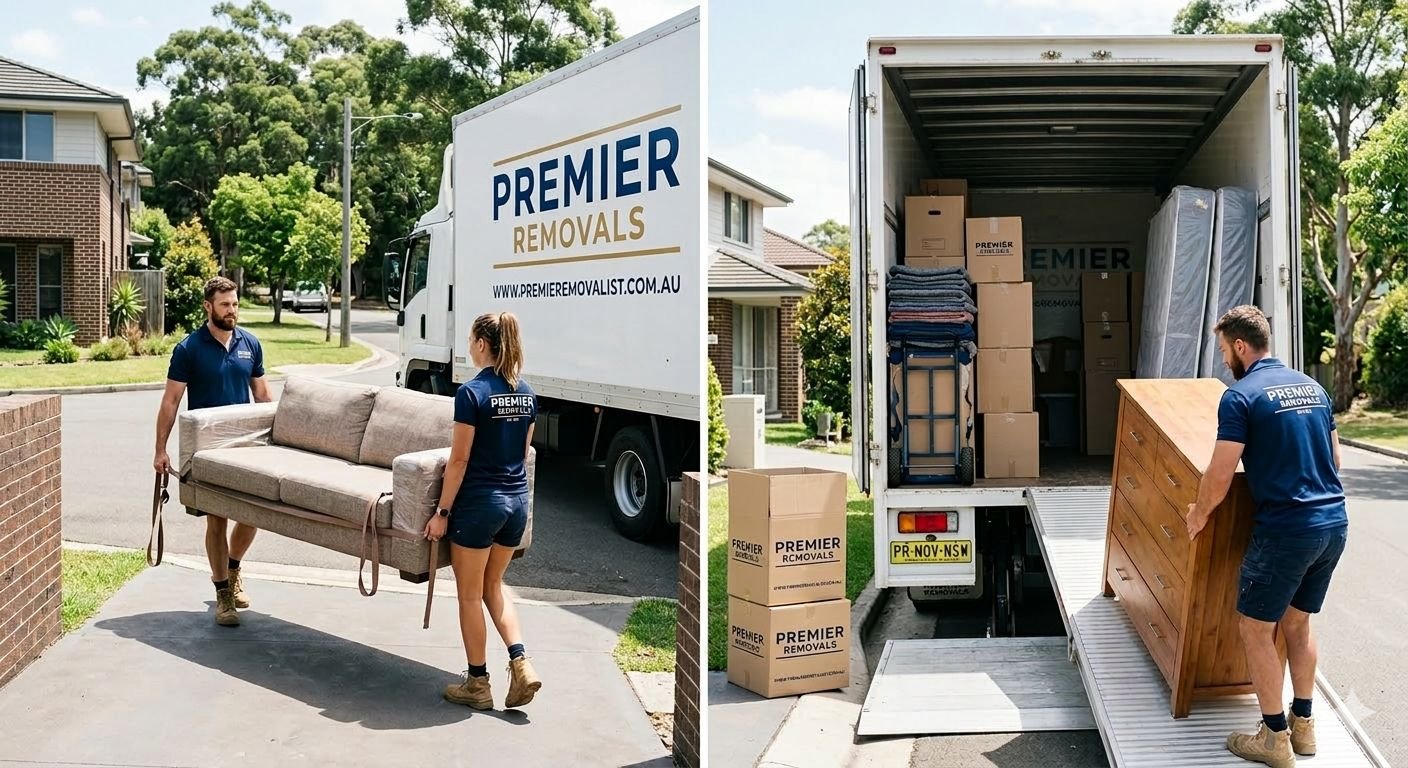
Here is the honest version of how piano movers in Wollongong charge. Almost everyone, us included, works by the hour with a crew and a truck, so the real question is not the hourly rate, it is how many hours and how many people the job takes. An upright on a ground floor with a clear path is a two-person, two-to-three-hour job. Put that same upright at the top of a narrow internal staircase and it becomes a three-person job with a skid board, and the cheapest quote on the day is usually the one that sent two blokes who had never done it before.
From our side of the truck, the advice we would give our own family is simple. Ask exactly what the rate includes: travel time, GST, the third mover if stairs are involved, and whether the price changes if the piano turns out to be heavier than described. Send photos of the piano, both sets of stairs and the doorway widths before you accept a quote, so the number you get is the number you pay. And if the piano is going with the rest of the house, have everything else boxed and ready. Loose items are the number one thing that eats hours on a move day, and every hour the crew spends stepping around lamps and open drawers is an hour you are paying for while the piano waits.
If the piano is part of a bigger move, read our removalist cost guide for what a full house move in Wollongong runs, then get in touch for a firm quote.
Why a Piano Is Not Just Heavy Furniture
People look at a piano and see something heavy. What actually makes it difficult is that the weight is in the wrong place. An upright carries most of its mass high and toward the back, behind the keyboard, which means it wants to tip backwards the moment you lift the front. A grand carries its weight across a frame supported by three legs that were never designed to take sideways load.
That is why pianos get damaged by people who are perfectly strong. It is not a strength problem, it is a balance problem — and the expensive part is not the case, it is the cast iron plate, the soundboard and the action inside. A dropped corner can crack a soundboard you cannot see, and you will not find out until it is tuned.
These are the jobs other companies quote high on to avoid. They are the jobs we are known for.
What We Move
Upright pianos
Spinets, consoles, studio uprights and the older full-size uprights. Weight runs from about 150 kilos up past 350 for a heavy old upright. These go on a purpose-built piano trolley, strapped, with the keyboard lid locked or taped and the whole case blanket-wrapped.
Grand and baby grand pianos
A grand does not travel on its legs. The lid is closed and locked, the pedal lyre and the legs come off, and the piano goes onto its straight side on a padded piano board, then gets strapped to the board and moved as one unit. Reassembly happens at the other end. It is a completely different job to an upright and it needs the right board and the right number of people.
Digital pianos, organs and keyboards
Lighter, but the actions and the electronics are fragile and the cabinets on older organs are often held together with fittings that have loosened over decades. Worth telling us the make and model when you book.
Pool tables and other awkward items
Slate pool tables come under the same category of work — heavy, fragile in an unexpected way, and needing dismantling. If you have one, mention it when you ring; we would rather bring the right gear than improvise.
What We Need to Know Before the Day
The questions we ask are the ones that decide whether the job takes an hour or four:
- Upright or grand, and roughly what age? Older instruments are heavier and often more fragile.
- Stairs at either end — how many, and are there turns? A straight run is very different from a tight landing.
- How far from the door can the truck get? Distance across gravel or a sloped driveway matters more than people expect.
- What is the floor at both ends? Timber, tile and polished concrete all behave differently under a loaded trolley.
- Any narrow doorways, tight corners or low awnings on the path out?
Send us a photo if you are unsure. Thirty seconds on your phone saves a lot of guessing, and it means we arrive with the right equipment and the right crew size instead of discovering the problem in your hallway.
Stairs, and When the Honest Answer Is No
Most piano jobs in the Illawarra are not about distance, they are about the staircase. We move pianos up and down stairs regularly and it is normal work with the right gear and enough people. But there are staircases we will look at and tell you it is not safe — a tight spiral, a landing that will not take the turning circle, an external timber stair that has seen better days.
When that happens we will say so before we start rather than half way through with your piano on the landing. Sometimes the answer is a different route, sometimes it is more people, and occasionally it is a crane or a window removal, which is specialist work we will point you toward rather than attempt.
After the Move: Tuning and Settling
Every piano goes out of tune when it moves. That is not damage and it is not a sign anyone did anything wrong — it is the soundboard and strings responding to a change in temperature and humidity, and it happens even on a careful move across town.
Give the instrument two to four weeks in the new house before you have it tuned. Tuning it the day after the move is wasted money, because it will drift again as it acclimatises. While it settles, keep it away from direct sunlight, away from a heating or cooling vent, and off an external wall if you can — internal walls hold a steadier temperature.
Booking a Piano Move
Most people book their piano as part of a full house removal, which is the cheapest way to do it because there is no second call-out — it rides in the same load on the same day. If the piano is the only thing going, that is a single-item job and often possible at short notice through our same day removals service. If it is going interstate, our interstate removals team plans it as a specific item within the load rather than treating it as ordinary furniture.
Frequently asked questions
Can you move a grand piano down stairs?
Yes — with the right crew and equipment. Tell us about the stairs and access when you book so we plan it properly.
Will my piano need re-tuning after the move?
Pianos often need tuning after any move because of changes in position and climate. We move it safely; we’d recommend a tuner settle it in afterward.
Do you move pianos as part of a full house move?
Absolutely. We can move your whole home and handle the piano with extra care on the same job.
Do you move pool tables and other heavy items too?
Yes — pianos, pool tables, antiques and other heavy or fragile pieces are our specialty.
Get a quote for your piano move in Wollongong
Need your piano moved safely? Tell us the type and the access and we’ll send an honest, no-obligation quote. Fill in the form below or call our Wollongong team on 1300 015 050.
Not sure if we cover your suburb? See every area we serve across Wollongong and the Illawarra.